|
|
|
|
The Elder Beat Newsletter — November 2026
|

|
|
Hello neighbors — and welcome to the November edition of The Elder Beat Newsletter.
|
If you feel a little more rested this morning, you can thank the clocks. Daylight saving time ended overnight, and we all got our extra hour back. The trade, of course, is that the evenings now arrive early. By the time dinner is cooked, it's dark outside, and the days start to feel smaller.
|
That's exactly why I love November's quiet invitation to turn toward each other. This is the month of gratitude, of Thanksgiving tables, of checking in on the neighbor whose porch light has come on a little earlier than usual.
|
This issue leans into that spirit. You'll find two easy ways to hear about what's happening in Happy Valley, a reminder about Medicare scams while Open Enrollment is underway through December 7, and an update inspired by a reader who wrote in with a helpful idea about staying safe at home. I'm grateful for every one of those messages.
|
Thank you for being here. I hope this issue gives you something useful, and perhaps a reason to leave the house on a dark afternoon.
|
|
|
|
Recent Posts on the Blog
|

|
|
Technology Tools That Help Seniors Stay Safe and Independent
|
Our October 10th post looks at technology that genuinely helps, without requiring you to become a tech expert first. We cover medical alert systems, medication reminder devices, video calling options (both dedicated devices and apps), smart home features that can reduce fall risk, and location-sharing tools. We also explain what to look for, what to skip, and where to get free, hands-on help, including AARP's Senior Planet tech hotline.
|
|
|
|
|
|
Social Activities and Senior Centers in Clackamas County
|
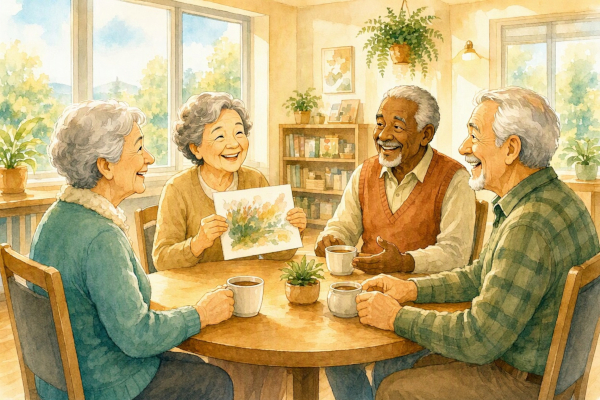
Our October 20th post is a practical tour of the community and senior centers in and around our area. The Milwaukie Community Center is the one closest to us, but there are ten others to consider in Clackamas County. We cover what a typical week looks like, from lunches and fitness classes to computer labs and legal clinics, along with tips for trying a center out without committing to anything. Our advice: start with lunch.
|
|
|
|
Local Resource Spotlight: Two Free Email Subscriptions
|
|
|
If you've ever missed a class or event because you only heard about it afterward, this one is for you. Happy Valley offers two emails that put the local calendar right in your inbox.
|
Library News. Every Monday, the Happy Valley Library sends a weekly email listing the programs scheduled that week. Offerings include events like Mah Jongg, the Genealogy Club, and a writers' support group called The Write Stuff. It's an easy way to spot something you'd like to try before the week gets away from you. Sign up on the Library's website.
|
Happy Valley Parks & Recreation Highlights. Each month, Parks & Recreation publishes an e-newsletter listing upcoming classes, field trips, and events. If you've been looking for something new to try, whether that's a class or an outing where someone else does the driving, this is a good place to find it. Sign up on the Parks & Recreation website.
|
|
|
|
Info Tip of the Month: Spotting Medicare Scams During Open Enrollment
|
Medicare Open Enrollment runs through December 7, and scammers know it. Your phone and mailbox are full of legitimate Medicare messages right now, which makes fake ones easier to slip past. A few simple rules can protect you:
|
- Medicare doesn't call, text, or email out of the blue to sell you a plan or ask for your Medicare number. If an unexpected caller asks, hang up.
- Guard your Medicare number the way you guard your Social Security number. Share it only with your doctors, pharmacies, insurers you've chosen, and counselors you've contacted yourself.
- Be wary of "free" offers. Free equipment, free tests, or free gifts in exchange for your Medicare number are common schemes. Medicare cards are free, and no one should charge you for one.
- Don't let anyone rush you. Pressure to decide on the spot is a red flag. Legitimate plans will still be there after you've taken time to compare them.
- Check your statements. Review your Medicare statements for services or equipment you never received.
|
If something seems off, call 1-800-MEDICARE (1-800-633-4227). You can also call SHIBA at 1-800-722-4134 for free, unbiased help sorting out what's real and what isn't.
|
|
|
|
Health Tip of the Month: Take Hearing Changes Seriously
|
Hearing loss often comes on so gradually that it's easy to explain away. You tell yourself that people mumble, that restaurants are louder than they used to be, that the TV just needs another click or two. But hearing changes are common as we age, and they're worth paying attention to.
|
Untreated hearing loss can make conversation tiring, which leads many people to quietly pull back from the gatherings they enjoy. Research has also linked it with social isolation and, in some studies, with a greater risk of cognitive decline and falls. In other words, it isn't only about volume. It's about staying connected.
|
Signs worth noticing include frequently asking people to repeat themselves, turning up the TV, struggling to follow group conversations, and feeling worn out after social events.
|
Here are a few good first steps:
|
- Get a hearing test. An audiologist can check whether the cause is something simple, like earwax, or a change in hearing that needs more attention.
- Check your coverage. Original Medicare may cover diagnostic hearing exams ordered by a doctor, but it generally doesn't cover routine hearing tests or hearing aids. Some Medicare Advantage plans do offer hearing benefits, so check yours.
- Know your options. Over-the-counter hearing aids are now available without a prescription for adults with mild to moderate hearing loss, often at a lower price.
|
If you've been wondering, it's worth finding out.
|
|
|
|
Community Corner: Smartwatches
|
In our October 10th post on technology tools, we described medical alert systems that typically come with a monthly contract. A reader wrote in with a helpful reminder that we left something out: smartwatches.
|
Our reader is right. Many smartwatches now include features that older adults often want, such as automatic fall detection, the ability to place calls directly from your wrist, and emergency contacts who can be alerted when something goes wrong. Many also track heart rate and steps. Unlike traditional medical alert systems, they usually don't require a monthly monitoring contract.
|
A few things are worth knowing before you shop:
|
- Calling without your phone usually means a cellular plan. That typically adds a monthly charge through your phone carrier, though it's a different arrangement than a long-term alert contract.
- There's no professional monitoring center. Alerts go to the contacts you choose, and in some cases to emergency services, so decide who you want to be called.
- Watches need charging and should be worn. A dead battery doesn't help in an emergency.
- Fall detection isn't perfect. It may not catch every fall, so it's a safety net rather than a guarantee.
- Compatibility matters. Some watches work only with certain smartphones.
|
Because the options can be overwhelming, try the free help we mentioned in October. AARP's Senior Planet hotline (888-713-3495) or Clackamas County’s ADRC (503-650-5622) can point you in the right direction. Thank you to the reader who spoke up. This is exactly why we love hearing from you.
|
|
|
|
Question of the Month
|
Every month we pose a single question to our community and invite you to respond. Selected answers appear in this newsletter. There are no right answers — only neighbors sharing what they know, what they have learned, and what they think. We love hearing from you.
|
|
A Response to the October Question
|
Last month we asked: What is one local business, service, or resource in Happy Valley or Clackamas that you think more neighbors should know about?
|
|
A reader wrote in to rave about the Happy Valley Library:
|
"You can borrow books and videos, take classes, join clubs, and take the grandkids to storytime. And it's all free!"
|
We couldn't have said it better. The library is one of those places that's easy to take for granted, and it has quietly become much more than a place to check out a book. It's somewhere to learn something new, find a group that shares your interests, and spend an afternoon with the grandchildren, all at no cost. If you haven't visited in a while, this is your nudge. And if you'd like to see what's coming up, the Library News email we mentioned in this month's Resource Spotlight lists each week's programs.
|
Thank you to our reader for sharing a favorite. If you have another local gem our neighbors should know about, we'd still love to hear it.
|
Do you use a senior or community center in Clackamas County? If so, what keeps you coming back? If not, what has kept you from trying one?
|
After our October 20th post on community centers, we're curious about the real experiences behind the brochures. Whether you're a regular, an occasional visitor, or someone who has never walked through the door, your answer can help your neighbors decide whether to give one a try.
|
|
|
|
Elder Beat Reads
|
|
This Chair Rocks: A Manifesto Against Ageism
|
Most of us have a long list of things we fear about growing older. Ashton Applewhite's argument is that a surprising amount of that list has been handed to us by a culture that treats aging as a problem to be fixed, and that we've absorbed it so thoroughly we no longer notice it.
|
Applewhite is a writer and activist, and she begins with a confession: she holds many of those assumptions herself. That honesty sets the tone. She isn't scolding her readers from above. She's working through her own prejudices alongside them, and showing how ageism, like other forms of bias, operates quietly in our jokes, our advertising, our workplaces, and our own self-talk.
|
The book is organized around the beliefs that do the most damage, and it takes them on with research, interviews, and a good deal of humor. She looks at what we assume about work, health, dementia, relationships, and where older adults should live, and she asks how much of it holds up. Along the way she points to evidence that well-being often improves in later life, which runs against everything the anti-aging industry would like us to believe.
|
This isn't a book that promises you'll feel young forever. Its goal is to help you stop dreading something that's going to happen anyway, and to notice when someone, including you, is treating older adults as less capable or less interesting than they are.
|
|
It pairs well with everything we've been exploring about connection and community. Ask for it at the Happy Valley Library or your favorite local bookstore, and let us know what you think.
|
|
|
|
Coming This Month
|
November brings two posts about giving back and being ready.
|
- Volunteer Opportunities for Active Seniors in Clackamas County (November 10) — Volunteering is one of the most rewarding ways to stay connected, and our community depends on it. We look at the many ways to get involved, from delivering Meals on Wheels and helping at senior centers to supporting libraries and other local organizations. We also talk through how to find the right fit, how much time most roles require, and what to ask before you sign up, so that giving your time feels energizing rather than overwhelming.
- Emergency Preparedness for Older Adults in the Pacific Northwest (November 20) — With winter storms, power outages, and the occasional ice event on the horizon, now is the time to plan. We cover how to build a simple emergency kit, how to prepare if you rely on medications or equipment that needs power, and how to keep in touch with neighbors and family when conditions change. We also point to local resources and ways to stay informed, so you can feel prepared rather than anxious.
|
|
|
Earlene on the Lighter Side
|
Meet Earlene. Because aging well includes laughing well — at life, at the absurdities of getting older, and occasionally at ourselves. We hope she brightens your day.
|
Fifty years ago, Earlene won first prize in a League of Women Voters writing contest on the importance of voting. The prize was a certificate and a twenty-five-dollar savings bond. She hasn't stopped talking about it since.
|
The winning essay hangs framed in the hallway. Its most famous line, which Chester has heard many times, is: “Democracy is like a potluck. It only works if everybody brings something.” At sixteen, Earlene thought this was profound. She still does.
|
This October, she escalated. The mail carrier asked how she was doing and received the date of the election, delivered like a weather warning.
|
“November third,” Earlene said. “Mark it.”
|
At the pharmacy, she told the pharmacist. At the dentist, she waited until his hands were busy, then told him too. His “Mm-hm” she counted as a pledge. A man waiting for the elevator at the medical building got the full speech, potluck included, and rode eleven floors in respectful silence.
|
On Saturday, Chester set down his newspaper. “Earlene, I voted two weeks ago.”
|
“We vote by mail in Oregon and everyone you’ve told has already voted. The pharmacist. The dentist. The mail carrier. He said so, twice, while backing away.”
|
|
Earlene considered this. “Then it’s working,” she said, and went to find their neighbor.
|
|
|
|
A Closing Note
|
As November settles in, I find myself thinking about how much of what makes this community strong is small and unglamorous. A phone call. A shared lunch. A reader who writes in with a better idea than ours.
|
Whatever your Thanksgiving looks like this year, whether it's a crowded table or a quiet one, I hope you'll have at least one conversation that reminds you that you're part of something. And if you know someone who might be spending the day alone, an invitation or a call could mean more than you realize.
|
— Molly Skeen
Founder, The Elder Beat
|
|
|
|

|
|
|
|
|
|
|
|
|
|